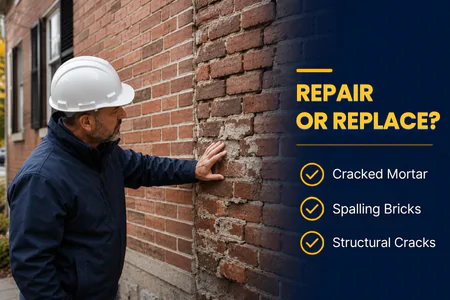
If you have noticed cracks creeping across your brick wall, white powder on the surface, or mortar crumbling out from between the bricks, you are probably wondering whether this is a small fix or the start of an expensive problem. It is one of the most common questions we hear when people call us about brick repair in Toronto, and the honest answer is that it depends on what is actually causing the damage and how far it has spread.
Brick is built to last for decades, sometimes over a century. But Toronto’s freeze-thaw climate, shifting foundations, and aging mortar all take a toll. The good news is that most brick problems are repairable if you catch them early. The trick is knowing which signs point to a simple repair and which ones mean a section needs full replacement. At NHC Building Restoration, this is the call we help property owners make every week, and below we walk you through exactly how we tell the difference.
What causes Brick to deteriorate in the first place?
Before you can decide between repair and replacement, it helps to understand why brick fails. In our experience working on buildings across the GTA, the damage almost always traces back to water and temperature.
- Failed or eroded mortar joints that let water seep behind the brick
- Poor original construction or low-quality brick
- Foundation movement that puts stress on the wall
- Blocked weep holes or bad drainage pushing moisture into the masonry
- Old or missing sealant around windows and joints
When can your Brick be repaired?
Most brick issues we see in Toronto are cosmetic or localized, which means a targeted repair will solve the problem without tearing out whole sections. Here are the signs that usually point to repair rather than replacement.
- Cracked or crumbling mortar: If the brick itself looks solid but the mortar between the bricks is cracked, soft, or falling out, you likely need repointing rather than replacement. Repointing, also called tuckpointing, involves grinding out the old mortar and packing in fresh mortar that matches the original. It restores the strength and weather resistance of the wall and is one of the most cost-effective masonry fixes available.
- Minor surface cracks: Thin, hairline cracks in a few bricks are often surface-level and can be sealed or patched. They are worth watching, but they rarely mean the wall is failing. We always check whether the crack is isolated or part of a larger pattern before recommending anything.
- A few spalled or chipped bricks: If only a handful of bricks are flaking or chipped while the rest of the wall is sound, we can replace those individual units in a process called brick stitching or spot replacement. This blends new brick into the existing wall without disturbing the whole structure.
- Loose or missing sealant: Gaps around windows, doors, and expansion joints are a frequent water entry point. Re-sealing these joints is a quick fix that protects the brick behind them. Our caulking services in Toronto handle exactly this kind of preventive work, and it often stops small problems from turning into big ones.
When does your Brick need replacement?
Sometimes a repair is not enough. When damage is widespread or structural, replacing the affected section is the safer and more durable choice. These are the red flags we take seriously.
- Large stepped or diagonal cracks: A crack that runs in a stair-step pattern through the mortar joints, or a wide diagonal crack across the wall, can signal foundation movement or structural stress. This is not a cosmetic issue. It usually means part of the wall needs to be rebuilt and the underlying cause addressed.
- Bulging or bowing walls: If a brick wall looks like it is leaning, bulging outward, or no longer sitting flat, the wall ties holding it to the structure may have failed. A bowing wall is a safety concern and almost always calls for rebuilding that section.
- Deep, widespread spalling: When spalling has eaten through the face of many bricks across a large area, patching individual units no longer works. At that point, replacing the deteriorated section restores both the look and the weather protection of the wall. Our Brick and Masonry Repair in Toronto covers everything from spot replacement to full section rebuilds, so the right approach depends on how much of the wall is affected.
- Cracked or crumbling mortar: If you can scrape brick material away with a screwdriver or your fingers, the brick has lost its structural integrity. Soft, sandy, or hollow-sounding brick has reached the end of its life and needs to be replaced.
Why catching it early saves you money
The single biggest factor in repair versus replacement is time. A failed mortar joint is cheap to fix. That same joint, left alone for three winters, can let enough water in to rot the wall ties, spall a dozen bricks, and damage the structure behind them. Now you are looking at a rebuild instead of a repointing.
We always tell clients that masonry is a maintenance item, not a one-time job. A quick inspection every couple of years, paired with prompt sealing and repointing, keeps small issues small. Pairing brick maintenance with good waterproofing is one of the smartest ways to protect both the appearance and the value of your property.
Need Brick Repair in Toronto? Get a Professional Assessment
You can spot many masonry warning signs yourself, but determining whether a crack is cosmetic or structural, or whether spalling is surface-level or severe, requires a professional assessment. If you notice stepped cracks, bulging walls, widespread spalling, or bricks that feel soft and crumble when touched, it is best to have the issue inspected before another Toronto winter causes further damage.
At NHC Building Restoration, we will identify the root cause, explain whether repair or replacement is the right solution, and recommend only the work your building actually needs. For trusted Brick Repair Toronto services, call 647-964-0477 or book a free consultation with our Toronto masonry team.